


The Potential Application of Pilot Peptide Synthesizer in Antibody Engineering
Release Time:2026-01-13
Number of views:782
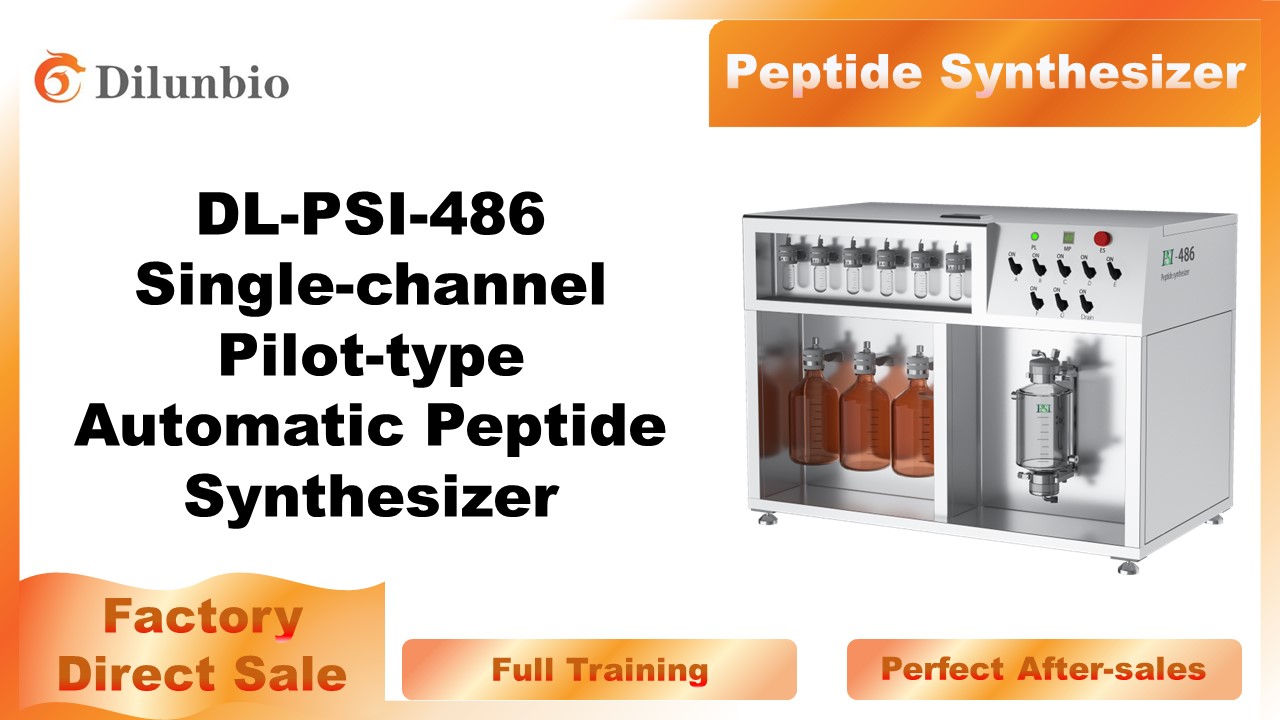
As a technological platform capable of synthesising specific peptide sequences with precision and controllability, the Pilot Peptide Synthesizer exhibits multiple points of alignment with the core requirements of antibody engineering. This technology demonstrates the potential to advance research depth and enhance development efficiency within the field of antibody engineering, with its influence potentially spanning multiple stages from early discovery to late-stage optimisation.
During the initial phases of antibody discovery and screening, the rapid generation of diverse candidate molecules constitutes a critical step. The Pilot Peptide Synthesizer offers a relatively direct and controllable method for peptide preparation. Researchers can synthesise a series of short peptide sequences corresponding to complementarity-determining regions or other functional domain features, based on known antigenic epitope information or through rational design. These synthesised peptides can be used to model critical portions of the antibody binding interface or serve as probes for investigating the structure-activity relationships in antigen-antibody interactions. This capability facilitates preliminary exploration and assessment of binding properties at an early stage, providing informative references for subsequent full-length antibody construction.
Antibody humanisation and affinity maturation represent crucial engineering processes aimed at reducing immunogenicity and enhancing binding performance. This involves systematic substitution or modification of amino acids in specific regions. Short peptide fragments incorporating diverse mutation combinations can be rapidly generated. These fragments serve structural biology studies, such as co-crystallography or NMR analysis, to elucidate the microscopic effects of specific mutations on local conformations and interaction interfaces. This fine-grained local analysis based on synthetic peptides complements whole-length antibody functional assays, providing a structural foundation for understanding mutation effects and thereby aiding design decisions.
Beyond traditional binding functions, conferring novel effector functions or enhancing physicochemical properties represents another significant direction in antibody engineering. This involves fusing or conjugating non-antibody sequences with specific functions to antibody frameworks. The ability to synthesise these functional peptides efficiently and accurately, coupled with facilitating their chemical modification, creates conditions for constructing structurally defined, highly uniform antibody-functional peptide conjugates. This facilitates systematic evaluation of how introducing different functional modules impacts the antibody's original properties.
Synthetic peptides also hold application value in antibody production and quality control research. Peptides synthesised for specific antibody regions can serve as analytical standards or capture reagents for developing mass spectrometry, chromatographic detection, or immunological assay methods. These enable qualitative and quantitative analysis of antibody samples, monitoring their post-translational modifications or degradation.
It should be recognised that applying leader peptide synthesis technology to antibody engineering entails certain considerations. Chemically synthesised peptides differ from fully expressed antibody proteins within biological systems in terms of structural complexity, folding environment, and post-translational modifications. Consequently, information derived from peptide studies typically requires validation in the full-length antibody molecule or more complex systems. Practical considerations such as the length of synthetic peptides, their solubility, and subsequent coupling efficiency with antibody fragments also warrant attention in implementation.
Pilot Peptide Synthesizer offer a flexible and precise molecular tool for antibody engineering research. By providing structurally defined, sequence-customisable peptides, they demonstrate auxiliary and complementary roles across multiple levels: antibody binding interface analysis, rational design support, novel fusion molecule construction, and assay development.
Previous
NoneShare to